
What Is Synthetic Phonics and How Is It Different from Traditional Phonics?
Synthetic phonics teaches children to convert letters into sounds (phonemes) and then blend these sounds together to form words. This is the method behind Jolly Phonics. Traditional phonics, on the other hand, often relies on memorizing whole words or using context clues, which can be slower and less systematic.
For Hong Kong children, who are often learning English as a second or third language, synthetic phonics offers a clear, step-by-step path to reading. Instead of guessing, kids learn to decode any word by sounding it out and blending the sounds. This builds confidence and independence from the start.
Why Multi-Sensory Learning Makes Jolly Phonics a Game-Changer for HK Kids
Jolly Phonics is famous for its multi-sensory approach: each of the 42 letter sounds is taught with a story, an action, and a song. This engages visual, auditory, and kinesthetic learners simultaneously, which is especially effective in a bilingual environment like Hong Kong.
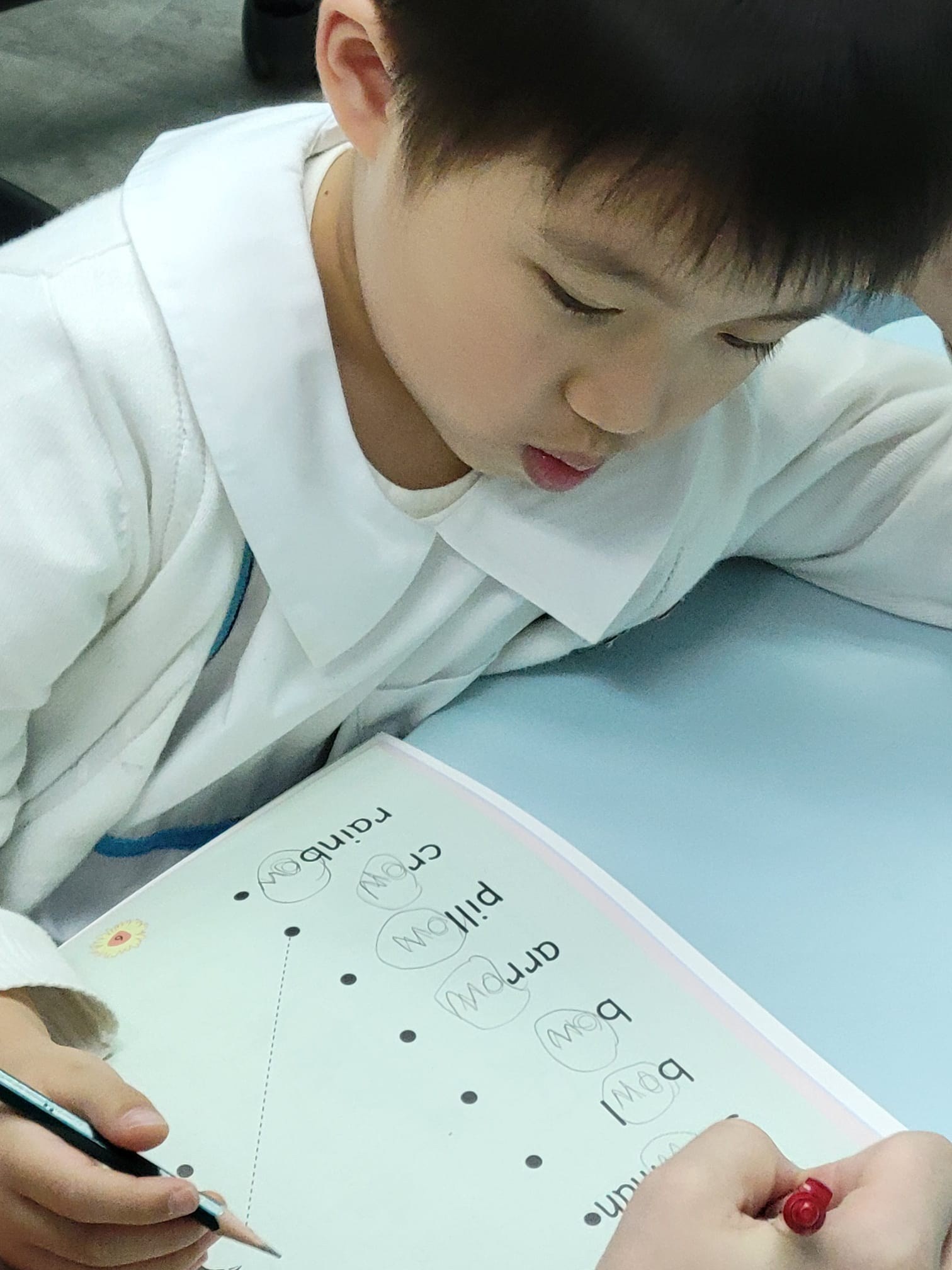
At Jolly Kingdom, our phonics class Hong Kong incorporates these actions and songs into every lesson. Children don't just hear the sound - they see it, say it, and move their bodies. This deepens memory and makes learning English phonics fun and memorable, reducing the frustration often seen with rote memorization.
Blending and Decoding: The Core Skills That Build Fluent Readers
Blending is the heart of synthetic phonics. Once children know a handful of sounds, they start blending them to read words like 'c-a-t' or 's-u-n'. Decoding is the reverse: breaking a word into its individual sounds to spell it. These two skills work together to unlock reading and writing.
In traditional phonics, blending is often introduced later, after many sounds are memorized. Jolly Phonics starts blending from the very first lesson. This means Hong Kong kids can read simple books within weeks, giving them a sense of achievement and motivation to keep learning.
How Jolly Phonics Addresses Common Challenges for Hong Kong Learners
Many Hong Kong parents worry about their child confusing English phonics with Cantonese pronunciation. Jolly Phonics tackles this by focusing on pure sounds (e.g., 'b' not 'buh') and using clear, consistent actions that reinforce the correct mouth position.
Additionally, Jolly Phonics teaches tricky words (like 'the' or 'said') separately, so children don't get discouraged. At Jolly Kingdom, our teachers are trained to support bilingual learners, ensuring that every child progresses at their own pace while building strong foundational skills.
Why Hong Kong Parents Are Choosing Jolly Phonics Over Traditional Methods
Parents across Hong Kong are seeing the results: children who learn with Jolly Phonics read earlier, spell more accurately, and enjoy English more. The structured yet playful approach fits perfectly into busy Hong Kong lifestyles, with lessons that are efficient and effective.
Traditional phonics can leave gaps, especially for second-language learners. Jolly Phonics, with its synthetic phonics foundation, provides a complete toolkit for decoding and encoding English. That's why our phonics class Hong Kong at Jolly Kingdom is so popular - we make learning English phonics a joyful journey.
Tips for Practicing Jolly Phonics at Home with Your Child
Reinforce what your child learns in class by practicing the sounds and actions for just 5-10 minutes a day. Use the Jolly Phonics songs available online to make it a fun routine. When reading together, encourage your child to blend sounds instead of guessing the word.
Remember, consistency is key. Even simple activities like pointing to letters on a cereal box and saying the sound can boost your child's confidence. And if you ever feel stuck, our teachers at Jolly Kingdom are always happy to share tips tailored to your child's needs.
Frequently Asked Questions
At what age should my child start Jolly Phonics?
Jolly Phonics is suitable for children aged 3 and up. At Jolly Kingdom, we offer classes for different age groups, starting from pre-K. The earlier children are exposed to synthetic phonics, the more naturally they learn to read and spell.
How is Jolly Phonics different from the phonics taught in local Hong Kong schools?
Many local schools use a traditional phonics approach that focuses on letter names and whole-word memorization. Jolly Phonics uses synthetic phonics, teaching letter sounds first and blending them immediately. The multi-sensory actions and songs also make it more engaging for young learners.
Will Jolly Phonics help my child with English spelling and writing?
Absolutely. Because Jolly Phonics teaches decoding (sounding out to spell), children learn to write words by listening to the sounds. This builds strong spelling skills. At Jolly Kingdom, we integrate writing practice into every lesson, so children apply their phonics knowledge immediately.
Want to see if this is right for your child?
Enroll in Jolly Phonics Class